Our Team
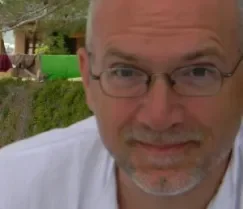
Thomas Cleland, Ph.D.
My research concerns how complex cognitive and perceptual phenomena can arise from, and be regulated by, cellular and neural circuit properties. Primarily using the sense of smell (olfaction), my students, colleagues, and I ask how learning, memory, expectation, and like processes shape the transformations performed on sensory inputs within relatively peripheral (i.e., experimentally accessible) cortical circuitry, and how these different transformations in turn influence behavior and subsequent learning. We triangulate on these questions using a range of techniques including electrophysiology, pharmacology, behavior and behavior genetics, the three-dimensional imaging of optically cleared brain tissue, and theoretical studies including biophysically constrained computational modeling and the elucidation of brain-inspired algorithms for implementation in neuromorphic hardware.
My faculty page at the Department of Psychology
Send email
Find me at Google Scholar, ResearchGate, Academia.edu, or Frontiers
Listen to my 2011 podcast on high-dimensional olfactory receptive fields, narrowcast from UTSA
Information on the statistics requirement for the Cornell Psychology major. The recommended course is Statistics and Research Design (PSYCH 2500), the 4-credit version of which also includes instruction in the statistical analysis language R and its IDE RStudio.
Principal Investigator
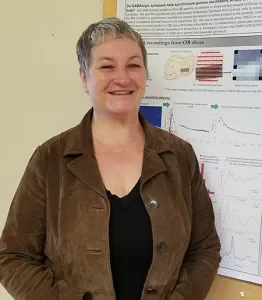
Christiane Linster, Ph.D.
In my research, I focus on the neural basis of sensory information processing, using olfaction as a model system. I am primarily interested in the relationship between perceptual qualities, as measured by behavioral experiments, and neural activity patterns, as observed electrophysiologically. My present work concerns how the central nervous system neuromodulators acetylcholine and noradrenaline, both of which have been implicated in memory deficits such as those symptomatic of Alzheimer’s disease, influence the representation and storage of olfactory information. This approach necessitates coordinated behavioral and electrophysiological experiments based on predictive theories.
Faculty page at the department of Neurobiology and Behavior
Send email
Find me on Google Scholar
Principal Investigator
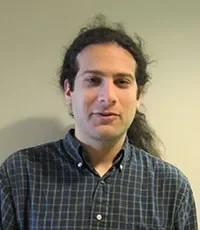
Matt Einhorn
Matt Einhorn develops hardware and software for experimental design and control, as well as managing lab operations. Among his creations for the lab are Glitter2, PyMoa, and Filers2, as well as the experimental control system Ceed, which is used to manage our electrophysiological recording rig for optogenetically active brain slices, and the open source Sapicore framework for the implementation of neuromorphic models on Pytorch. Matt also is a core developer of the Kivy application development framework for Python.
Programmer and technician

Thomas Cleland, Ph.D.
My research concerns how complex cognitive and perceptual phenomena can arise from, and be regulated by, cellular and neural circuit properties. Primarily using the sense of smell (olfaction), my students, colleagues, and I ask how learning, memory, expectation, and like processes shape the transformations performed on sensory inputs within relatively peripheral (i.e., experimentally accessible) cortical circuitry, and how these different transformations in turn influence behavior and subsequent learning. We triangulate on these questions using a range of techniques including electrophysiology, pharmacology, behavior and behavior genetics, the three-dimensional imaging of optically cleared brain tissue, and theoretical studies including biophysically constrained computational modeling and the elucidation of brain-inspired algorithms for implementation in neuromorphic hardware.
My faculty page at the Department of Psychology
Send email
Find me at Google Scholar, ResearchGate, Academia.edu, or Frontiers
Listen to my 2011 podcast on high-dimensional olfactory receptive fields, narrowcast from UTSA
Information on the statistics requirement for the Cornell Psychology major. The recommended course is Statistics and Research Design (PSYCH 2500), the 4-credit version of which also includes instruction in the statistical analysis language R and its IDE RStudio.
Principal Investigator
Matt Einhorn
Matt Einhorn develops hardware and software for experimental design and control, as well as managing lab operations. Among his creations for the lab are Glitter2, PyMoa, and Filers2, as well as the experimental control system Ceed, which is used to manage our electrophysiological recording rig for optogenetically active brain slices, and the open source Sapicore framework for the implementation of neuromorphic models on Pytorch. Matt also is a core developer of the Kivy application development framework for Python.
Programmer and technician